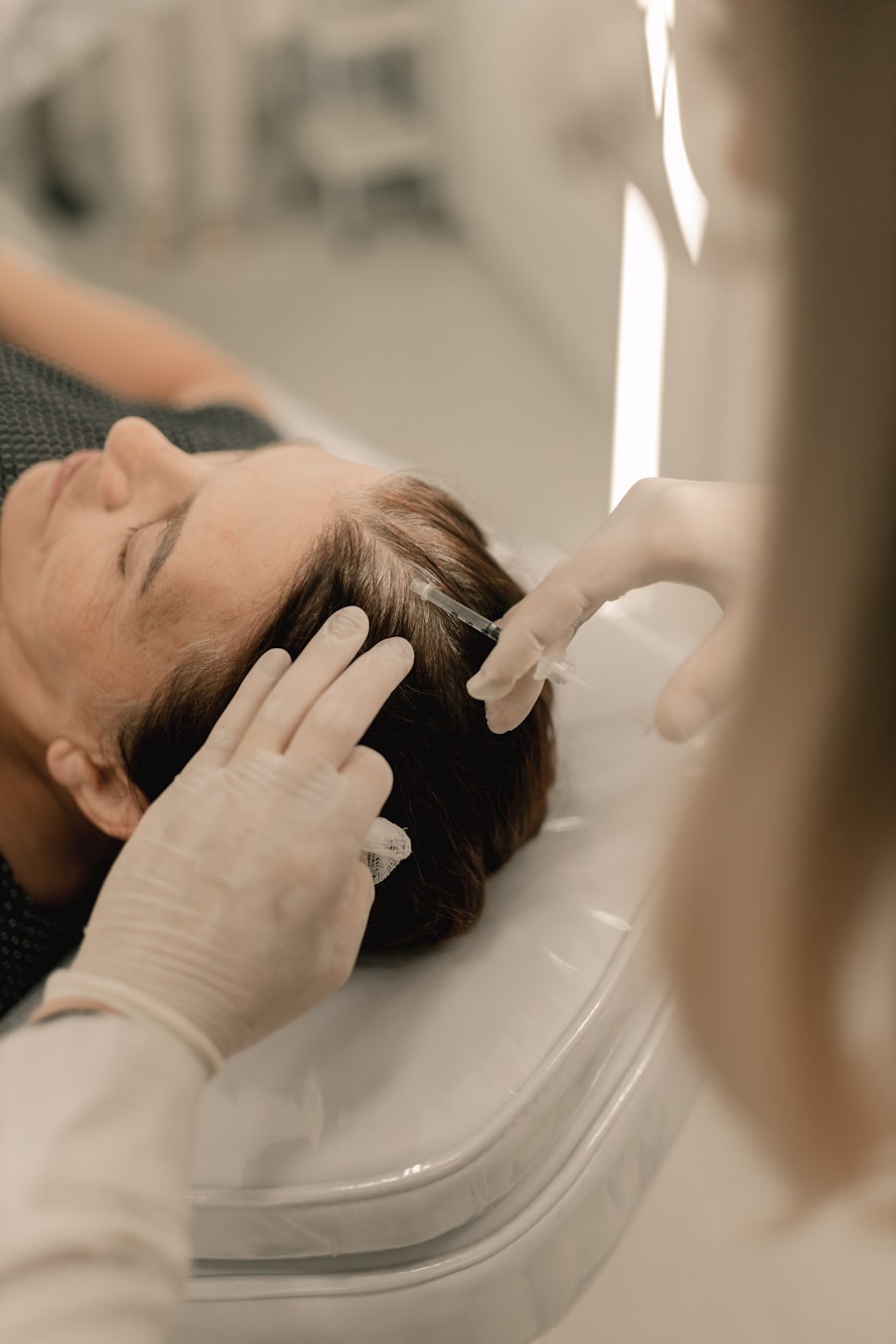
Search “hair transplant Turkey” for five minutes and you’ll be flooded with dramatic before-and-after photos promising a complete transformation. Some of those results are genuinely achievable. Others are curated to show the single best outcome a clinic has ever produced, photographed under flattering lighting at exactly the right angle. This guide is about setting realistic expectations: what actually determines your results, how to interpret before-and-after photos critically, and what a genuinely good outcome looks like for different starting points.
What Actually Determines Your Results
Hair transplant outcomes aren’t random, and they aren’t purely a function of which clinic you choose, either. A handful of biological and technical factors interact to determine your final result.
Donor Area Density and Quality
Your donor area — typically the back and sides of the scalp — is the source of every graft you’ll receive. The density and health of hair in this area sets a hard ceiling on how much can realistically be transplanted. A patient with a thick, dense donor area has more raw material to work with than someone whose donor area is naturally finer or already somewhat thinned.
Degree and Pattern of Hair Loss
Hair loss is typically classified using the Norwood scale for men (ranging from minimal recession to extensive baldness) or the Ludwig scale for women. Someone with early-stage, localized thinning generally has an easier path to a dramatic-looking result than someone with extensive, long-standing baldness across the entire scalp, simply because there’s a more favorable ratio between available donor hair and the area that needs covering.
Hair Characteristics
Hair color, thickness (caliber) and curl pattern all affect how much visual coverage a given number of grafts can provide. Coarser, wavier hair tends to create more visual density per graft than fine, straight hair, because each strand takes up more visual space and grafts can appear to “cover” more scalp.
Surgical Technique and Execution
As covered in our guide comparing FUE, DHI and Sapphire FUE, the skill of the surgical team in extracting healthy grafts, minimizing time outside the body, and placing them at the correct angle and density has a direct impact on graft survival and how natural the final result looks.
Aftercare and Healing
How well you follow your clinic’s aftercare instructions in the weeks following your procedure also plays a role in graft survival, which in turn affects your final density.
How to Read Before-and-After Photos Like a Skeptic
Before-and-after photos are one of the most useful — and most easily manipulated — tools in hair transplant marketing. A few things worth checking whenever you look at them:
- Same lighting, same angle: If the “before” photo is dim and the “after” photo is bright and well-lit, the comparison is exaggerated by lighting alone, not just the procedure.
- Same hair length and styling: Wet, slicked-back hair in the “before” photo compared to styled, voluminous hair in the “after” photo will always look like a bigger transformation than it actually is.
- Timeline stated clearly: A credible photo set will tell you how many months after the procedure the “after” photo was taken. Anything under 8–10 months isn’t yet showing the final result.
- Consistency across many patients, not just the best case: One dramatic transformation tells you the clinic’s best possible outcome. A gallery of varied, realistic-looking results across many different starting points tells you much more about what to expect for your own case.
What Realistic Results Look Like by Starting Point
Early, Localized Thinning (Norwood 2–3)
Patients at this stage typically have a strong donor supply relative to the area needing coverage, which generally makes it easier to achieve a full, dense-looking result. The main challenge here is often more about hairline design — getting the shape and density gradient right — than about having enough grafts to work with.
Moderate Hair Loss (Norwood 4–5)
This is a very common starting point for patients traveling to Turkey. A well-planned procedure, sometimes across two sessions for more extensive cases, can typically restore substantial coverage and density, though achieving the exact density of hair the patient had in their twenties isn’t always realistic in a single session, particularly for larger treatment areas.
Extensive Hair Loss (Norwood 6–7)
These are the most complex cases, since the donor supply has to be carefully budgeted across a large treatment area. A good surgeon will be honest that full density everywhere may not be achievable in one procedure, and may recommend a strategy that prioritizes the hairline and frontal area, with a lower-density approach toward the crown, since donor hair is a limited resource that can’t be created, only relocated.
Diffuse Thinning Without Clear Balding Pattern
Some patients, particularly those with early or diffuse thinning rather than classic male-pattern baldness, may be better candidates for a combination approach involving transplantation alongside other treatments, since ongoing thinning in non-transplanted areas can affect the long-term appearance of the result. A responsible clinic will discuss this rather than treating transplantation as a universal solution for every hair loss pattern.
What a “Good Result” Actually Means
A good hair transplant result generally isn’t about achieving the exact density of a 20-year-old’s untouched hairline. It’s about:
- A natural-looking hairline that suits your face shape and age, without an artificially straight or “drawn on” appearance
- Believable density that blends well with your existing hair, without obvious patchiness or visible gaps
- Hair that grows, can be cut, styled and treated like the rest of your hair, since it comes from your own follicles
- A result that looks proportionate to what your donor supply could realistically achieve, rather than an impossible promise
Patients who go in with this kind of realistic framing tend to be significantly more satisfied with their results than those expecting an idealized, magazine-cover transformation regardless of their starting point.
Why Some Results Disappoint (and How to Avoid That)
When patients are unhappy with their results, it’s rarely because the surgery itself failed outright. More often, it traces back to one of a few avoidable issues:
- Mismatched expectations: Expecting a level of density that the donor supply simply couldn’t support
- Judging results too early: Evaluating outcomes at month 4 or 5, before the growth cycle has had time to mature
- Choosing technique over talent: Selecting a clinic based purely on which techniques they advertise, rather than the skill of the actual team performing the work
- Not following aftercare instructions: Reducing graft survival through avoidable post-procedure mistakes
Each of these is preventable with the right information going in — which is exactly why we cover realistic timelines and clinic vetting in detail elsewhere on this site.
Second Sessions: Normal, Not a Failure
For patients with more extensive hair loss, a second session — sometimes a year or more after the first — is a normal part of achieving the desired final density, not a sign that the first procedure went wrong. This is particularly common for higher Norwood stages, where donor supply has to be allocated carefully across sessions to protect the long-term donor area. If your case might benefit from a staged approach, an honest clinic will explain this as part of your initial consultation rather than presenting a single session as guaranteed to solve everything.
How to Set Expectations Before You Ever Board a Flight
The most reliable way to set accurate expectations is to have a real conversation about your specific case before you travel, not after. Share clear, well-lit photos from multiple angles, describe how long your hair loss has been progressing, and ask directly what result is realistic for your donor supply and pattern. A clinic that takes the time to walk you through this honestly — including where the limits are — is doing you a favor, even if the answer isn’t as dramatic as the most eye-catching photo on their homepage.
Questions to Ask About Expected Results
- Based on my donor area and hair loss pattern, what density can I realistically expect?
- Will one session be enough, or is a staged approach recommended for my case?
- Can I see results from patients with a similar starting point to mine, not just your best case?
- At what point after the procedure should I expect to judge my final result?
Do Results Look Different for Women?
Hair transplantation for women is less common than for men, but demand has grown steadily, particularly for women with a defined, stable pattern of thinning rather than diffuse hair loss across the whole scalp. Female hair loss is often classified using the Ludwig scale, and because women rarely shave their donor area the way male patients typically do, some clinics use specialized extraction techniques that avoid the need for a full shave. Realistic outcomes for women follow the same general principles as for men: results depend on donor supply, the pattern and stability of hair loss, and surgical execution. Because diffuse thinning (as opposed to clearly defined balding) is more common in female pattern hair loss, it’s especially important for women to get an honest assessment of candidacy before committing to a procedure, since not every case of female hair thinning is a good match for transplantation alone.
Will Your Transplanted Hair Ever Fall Out Again?
One of the most reassuring facts about hair transplantation is that transplanted follicles are typically taken from the donor area at the back and sides of the scalp, which is genetically resistant to the hormone (DHT) responsible for male and female pattern baldness. Once successfully transplanted and healed, these follicles generally retain that same resistance in their new location, which is why transplanted hair is considered a permanent solution. That said, your existing, non-transplanted hair — the hair you had before the procedure — can still continue to thin over time according to your natural genetic pattern. This is why some patients choose to combine a transplant with ongoing treatments like finasteride or minoxidil, to help protect existing hair and preserve the overall look of the result as they age. Your surgeon can advise whether this makes sense for your specific case.
How Photography and Presentation Can Mislead (A Closer Look)
It’s worth understanding, in a bit more detail, just how much a photograph can be shaped without technically being “fake.” A patient photographed from directly overhead under bright studio lighting, with hair combed to maximize coverage, will look meaningfully different from the same patient photographed under harsh side lighting with hair pushed back. Neither photo is doctored, but one tells a far more flattering story than the other. This is precisely why independent reviews, photo timelines, and seeing a range of results — not just a single highlight photo — matter so much when evaluating what to expect from a specific clinic.
Frequently Asked Questions About Results
How many grafts does it take to “look full”?
There’s no universal number, since it depends entirely on the size of the area being treated and your hair characteristics. A small hairline touch-up might need under 1,000 grafts, while restoring extensive baldness across the crown and mid-scalp might require 4,000–6,000 or more, sometimes across multiple sessions.
Can a hair transplant fix a receding hairline and a thinning crown at the same time?
Yes, in many cases, though the available donor supply has to be allocated across both areas, which is part of why an honest consultation about priorities matters — some patients choose to prioritize the hairline first, since it has the greatest impact on overall appearance.
Is it possible to have unrealistic expectations even with a great surgeon?
Yes. Even the most skilled surgical team is limited by your available donor supply and hair characteristics. A great surgeon will tell you honestly what’s achievable rather than promising to exceed your biological limits.
The Bottom Line
The best predictor of satisfaction after a hair transplant isn’t the most dramatic before-and-after photo you can find online — it’s an honest, personalized assessment of what your specific donor supply and hair loss pattern can realistically achieve. A good clinic will tell you what’s possible and what isn’t, rather than promising a transformation that isn’t grounded in your actual biology.
If you’d like an honest, personalized read on what results might look like for your case, send a few clear photos of your hair loss and we’ll walk you through what’s realistic before you make any decisions. There’s no obligation attached to asking, and having a clear, honest picture of what’s achievable is a far better foundation for a good outcome than chasing the most dramatic photo you found online.